Blogia

HISPANIARQUEOLOGIA

BANDITS AND WITCHES IN ASTURIAS por Jonathan Jarrett
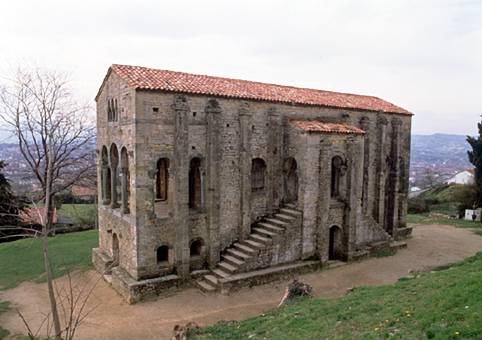
PALACIO DE RAMIRO I en el Naranco-Oviedo

BANDITS AND WITCHES IN ASTURIAS -AUTOR     Don  JONATHAN JARRETT

I am, as the sidebar may still report by the time this post actually goes up, still slogging through Barbero and Vigil’s Formación del Feudalismo for the Aprisio paper that is hopefully also not any longer mentioned there. I have expressed myself on how heavy going this book is before, and I am torn between urging that its considerable importance makes it compulsory reading for any scholar of early medieval Christian Spain (and even non-Christian Spain, though there maybe only one chapter), and the unshakeable feeling that, if it was so set, the field would be reduced by about ninety per cent as most people gave up the will to study. That all said, and it’s nice to have it off my chest, I’ve just found something interesting. See this little nugget:

Another notice relevant to the era of Ramiro I makes manifest the great difficulties that this monarch endured in consolidating himself on the throne. These difficulties were of orders both political and, more markedly, social. Ramiro I deployed great energy against all his adversaries, members of the nobility who disputed the throne with him. The Albeldense informs us that this king found himself confronting various latrones whom we may consider as peasants in rebellion, that is to say, something similar to that which took place in the reign of Aurelio, and, combined with them, there were also persecuted wizards who were condemned to the fire; these magicians would have been practitioners of the indigenous non-Christian rites and whose roots are to be sought in the ancient organisation of society.1

In some ways this is typical for Barbero and Vigil—you can already see in my fairly close translation perhaps that this is not the most mellifluous prose ever committed to the page—but in others it is not. Most of this book is very careful much-chewed-over consideration of the evidence, but there are certain preconceptions that they had which meant that occasionally they saw something that fitted and it got straight through without critique. I’m afraid this was one such curveball. Some background first of all.

Statue of Ramiro I of Asturias outside the Palau Reial in Madrid

Statue of Ramiro I of Asturias outside the Palau Reial in Madrid, photo by the author

Ramiro I was King of Asturias between 842 and 850. Some sources say he was son of Bermudo I (789-791) but Barbero and Vigil show good reasons to be suspicious about such claims in the Chronicle of Alfonso III, which is among other things very concerned to show a good long ancestry for its namesake monarch and seems to have pedigrees that no other source retains.2 Also, he lived a long time before succeeding if he was born during Bermudo’s reign, and since Bermudo allegedly abdicated because he was persuaded that his having entered the diaconate a long time before barred him from royal power, it is perhaps less likely that he was having kids after abdicating. So anyway, whoever he was, Ramiro was not unopposed, and he first had to defeat a rival king called Nepotian, supposedly a relative of Alfonso II (791-842) whom they were battling to succeed. Had Ramiro not won, I imagine it would now be clear that Nepotian was the closer kin and therefore rightful heir, but Ramiro defeated and killed him and so it’s Ramiro who got written into the succession. Not that things got easier for him: two years later Vikings made one of their few descents on Spain, though Ramiro was tough enough for them, and in 846 the Muslims captured the southernwards city of León, though it is a very long way from clear that Ramiro actually controlled that area despite Alfonso III’s chronicle’s claims, which are a lot more to do with the fact that he did.3 Anyway, Ramiro was unable to laugh that one off and it stayed lost to Asturias for some time.

Santa Maria del Naranco, near Oviedo, previously the royal palace of Asturias, probably built for Ramiro I

Santa Maria del Naranco, near Oviedo, previously the royal palace of Asturias, probably built for Ramiro I, image from Wikimedia Commons


Now most of my cynicism about the sources here is straight out of Barbero and Vigil, so you can tell I get on all right with that, but when it looks as if the sources might support some assertions about long continuity and ancient indigenous custom, which was kind of their deus ex machina for Asturian peculiarity, such careful sifting of evidence seems to have gone out of the window and we get things like the paragraph above, where to read it you would think that Ramiro’s opponents raised the earth and woods against him in the forms of their inhabitants. It’s like what the Telmarines must have thought when Narnia came back to life, isn’t it? So, what does the source actually say? Here’s a translation, with the Latin in the footnote:


Ramiro reigned seven. He was a rod of justice. He tore out the eyes of bandits. To wizards he put an end by fire. And the tyrants ranged against him, with amazing speed he overthrew and exterminated. Firstly he overcame Nepotian at the Bridge of Cornellana and thus came to the throne. At the same time the Northmen first came to Asturias. Afterwards of the same Nepotian along with a certain tyrant Aldroito, he blinded the eyes of both of them, and, the victor, killed the proud Piniolo. At Liño he built a church and a palace vaulted with wonderful artistry. There he passed away from this world and rests buried in Oviedo. On the day of the Kalends of February in the Era 888.4

So, er hang on, where’s this unified rural opposition again? I had Nepotian all drawn up with an army of dwarves and hags already, and that just looks like a fairly generic statement of harsh justice meted fairly to me. At the very most it’s a “no-one could kick King Ramiro’s behind! No sir! He kicked theirs! And how!” level of panegyric, not a detailed analysis of his opposition. Unlike in the slave revolt under Aurelio that Barbero and Vigil reference, I don’t see any sign here that there was any genuine peasant uprising in this note; I’m sure Asturias had enough badlands, most notably to the southern edge through which traders might be going to and from Muslim Spain, to keep a fair few bandits going. I don’t think banditry always has to indicate peasant reactions to oppressive rule, I see it more as a reaction to opportunity to make it rich quickly and run away safely, and a border land like there certainly had that.

But what about the wizards? Well, two possibilities spring to mind. Firstly, as Yves Bonnaz whose edition of the Chronicle of Albelda I’m translating there points out in his commentary, regulations against witches and wizards is a good old Visigothic tradition from when the Christianization of Spain was a lot more shaky, and if you’re writing up a good old-fashioned just king in the ninth century, that template probably appeals enough that you invoke it. In that case the chronicler is just trying to say “he enforced law like the kings of old (and thwarted all the causes of social ill mentioned in their laws as I will now list)”. In fact he may be upping the ante, as the Visigoths ‘only’ prescribed 100 lashes and scalping for wizards. Tough times call for tough justice!


Memorial stone from the church of Santianes de Pravia, capital of Asturias during the reign of Ramiro (note the <em>interlace</em>)

Memorial stone from the church of Santianes de Pravia, capital of Asturias during the reign of Ramiro (note the interlace)

But the other possibility involves taking the threat slightly more seriously, and this the kings of the time appear to have done. In 856 King Ordoño I issued a charter to the monastery of San Julián de Samos giving them power to punish “blood-letters, bandits that have fled from the monastery and magicians” (“samguimistios, latrones refugas monasterii, magicos”—’blood-letters’ probably isn’t what that first word means but I can’t do any better with it, can you? and if you can, what about those bandits fleeing from the monastery?)5 The fact that this mission is given to a monastery shows how worldly Church power can get but also associates the missions of moral and spiritual order. We are, as Bonnaz points out (and here he has got some Barbero and Vigil on him I think), in an area where pagan practice was probably still widespread: “Crimes, vols, fuite d’esclaves sans doute, pratique de la magie ne sont-ils pas des phénomènes liés à l’instabilité persistante de ce pays?” he asks,6 because of course as we now see demon-worshippers spring up wherever political order gets a bit wobbly don’t they? Or maybe not. I think this tells us more about Dr Bonnaz and his politics than about early medieval Galicia, to be honest. So what this made me think of was, again, the seminar the other day by Celia Chazelle and her suggestion that priests who were a bit ‘local’ in their liturgical practice might be regarded as magicians by strait-laced reformers. I wasn’t too sure about that, but if you’re asking me what a monk calls or a king called priests who were in political opposition to him, and who probably entreated God against you in ways that might well have appealed to local superstitions, well, ‘magician’ or ‘wizard’ would be one answer I could accept, especially given Dr Chazelle’s various instances of the use of the Christian mystery in charms and spells by apparently sincere believers. So maybe this is what we’re looking at. Or maybe it just is staff-bearing wizards standing on mountain tops after all, but I thought that was a more modern idea…

1. Abilio Barbero & Marcelo Vigil, La Formación del feudalismo en la Península Ibérica, 2nd edn. (Barcelona 1978), pp. 262-263, translation mine.


2. Ibid., pp. 300-302 and several points thereafter. See also Amancio Isla, “Monarchy and Neogothicism in the Astur Kingdom, 711-910″ in Francia Vol. 26 (Sigmaringen 1999), pp. 41-56.

3. Barbero & Vigil, Formación, pp. 279-285.

4. Y. Bonnaz (ed./transl.), “Chronique d’Albelda” in idem, Chroniques Asturiennes (fin IXe siècle) (Paris 1987), pp. 10-30 with commentary 67-104, cap. 45. Latin, following Bonnaz’s collation: “Ranimirus regnauit septem. Virga iustitiae fuit. Latrones oculos euellendo abstulit. Magicis per ignem finem imposuit. Sibique tyrannos mira celeritate subuertit atque exterminauit. Prius Nepotianum ad pontem Narceiae superauit et sic regnum accepit. Eo tempore Nordomanni primi in Asturias uenerunt. Postea idem Nepotianum pariter cum quodam Aldroito tyranno, oculos amborum eiecit, superbumque Piniolum uictor interfecit. In locum Ligno ecclesiasm et palatia arte fornicea mira construxit. Ibique a sæculo recessit et Oueto tumulo requiescit. Sub die kalendas februarias era DCCCLXXXVIII.”

5. Antonio C. Floriano Cumbreño (ed.), Diplomática Española del Periodo Astur: estudio de los fuentes documentales del reino de Asturias (718-910) (Oviedo 1949), I p. 271 as cited by Bonnaz, Chroniques, Alb. 45 comm. n. 2.

6. Ibid.

Comentarios

Responde Clemens Radl

While I can’t do any better on the samguimistios, I am pretty sure that there were no „bandits fleeing from the monastery“, but that there were bandits and that there were people (monks, pueri oblati, servants, whatever) that fled from the monastary, thus I believe the text should read samguimistios, latrones, refugas monasterii, magicos.

By the way, I fully agree with your interpretation of the Chronicle of Albelda. There doesn’t seem to be much of an organized peasant uprising. A few days ago I commented on the lack of penitentials in Catalunya. Well, for Asturia we have the Paenitentiale Vigilanum sive Albeldense (Corpus Christianorum 156A, 1998), most probably from the second half of the ninth century, i. e. roughly the time of Ordoño I and his charter for San Julián de Samos. I’ll have to look up the edition and see what this penitential says regarding magicians. Might be interesting to see, if they just copied old Visigothic rules or if they adapted it somehow.

Responde Jonathan Jarrett

Thankyou Clemens, that makes a good deal of sense. I shan’t amend it as stands because the text in the edition is as I’ve quoted, but I think you’re probably right about how it should be read. If you get anywhere with the penitential, do let us know! That Vigila lad was a busy fellow


Responde magistra Says

Is the point about wizards partly a way of stressing the Christian credentials of a ruler who hasn’t got many Christian deeds in his favour otherwise (one church built and no mention of other patronage/respect/protection of the church in his write-up)? But if he’s slaying wizards that means he’s not just a tough prince, he’s a tough Christian prince. I’m only surprised that they don’t also stress that he kicked pagan Viking ass (unless maybe he didn’t).

As for the idea of more magic in times of political weakness, I don’t think it’s meant in the sense of an actual increase. I think it’s based on the idea that paganism always survives among the lower orders, it’s just that the church and state are constantly repressing it, and so whenever the church’s control slips for a moment it all reappears again. (How realistic this model is depends on what you choose to define as paganism and whether various forms of Christian/non-Christian syncretism count.

Responde Jonathan Jarrett

It is weird about the Vikings: you would expect the victory to be emphasised, and the (slightly and complicatedly) later Chronicle of Alfonso III does indeed so emphasise. I think Albelda’s chronicler thought that some count or other had done the battling there and so it wasn’t one of Ramiro’s own top achievements.

As to the survival of paganism, yes, I agree and was reaching towards that myself in what I said, hence the B&V mention again; as I say, they basically wanted us to believe that really nothing changed in Asturias that the Asturians didn’t do themselves. With it put like that, I suddenly wonder where they were from… Hmm: Barbero was from Madrid, so no obvious patriotism there. Weird.


Responde  Theo Says

Could ’samguimistios’ mean ‘blood-mixers’ (or even ‘blood-mixed/half-breed/mongrel’), in analogy to ’sanguisuga’ = ‘bloodsucker’ (L&S, 1627)?


Responde Jonathan Jarrett

Wow. If you were right about the `mongrel’ thing that would be an almost unparallelled but very interesting hint of actual racism. Albelda is, y’know, all cool about that stuff, but not every charter scribe may have felt the same I suppose. Thankyou for that suggestion!

Responde Theo Says

“that would be an almost unparallelled but very interesting hint of actual racism.”

Which is precisely why I’d be reluctant to use that translation. You say ‘almost unparalleled’ – do you know of any other examples of blood-racism from the period?

Responde Jonathan Jarrett

No, I was just being cagey. I mean, it depends what strength you give to words like Hagarenes and Chaldæans, doesn’t it? These are not historically correct, and they happen to be the names of tribes who were the enemies of Israel, but no-one probably knows they’re not historically correct, and it could just be a learned word for Moor or Saracen that has a convenient double-loading… or it could be an ethnic slur. And this may depend on the context.

Responde Clemens Says

First of all: I looked up the passage with the refugas in the original edition (Diplomática Española del Periodo Astur) and there it says tam sanguimistios, latrones, refugas Monasterii, magicos … (nr. 63 p. 271). So probably Bonnaz got it wrong.

Regarding the sanguimistii, I think, the etymology given by Theo is quite correct. As to the meaning, I am still not sure. Yet I am reasonably sure that it is not to be understood in a racist way, but rather, as you might say, somewhat to the contrary: it might be directed against incestuous behavior. Thus „mixing blood“ would refer to mixing your family’s blood with your own blood (and thereby contaminating it). I found one instance of a canon regarding sororate marriages with the rubrum Ut suo sanguini nemo misceatur, which could support this understanding of sanguimistii. See also Carlos de Ayala Martinez, Sacerdocio y reino en la Espana Altomedieval (2008) p. 157 who translates our passage as consanguíneos (it’s in Google Books).

As we were talking about pagan practices, superstition, and magical rites, another remotely possible meaning came to my mind: It could refer to people who mix their blood with food for medical or, rather, magical reasons. But I tend to favor the first explanation about incest.

Finally, I looked into the Paenitentiale Vigilanum (Corpus Christianorum 156A), which is a short and quite simple penitential. It was conceived and written after 830 but before 976, when the oldest extant manuscript was finished (the Codex Vigilanus, covered previously on Tenthmedieval). According to Francis Bezler, Les pénitentiels espagnols (Münster 1994) p. 8, the penitential was written around 850, which would fit perfectly with our charter of King Ordoño I from 856. Unfortunately, Bezler does not give any evidence that goes beyond the two dates mentioned above, but anyway, regarding Spanish penitentials, the Vigilanum is the only one that comes in any way close to the time and region we are talking about.

The penitential is comprised of 113 mostly very short canons, which are systematically arranged in 15 chapters. There is no introduction or preface. The sources of the Vigilanum are, as you would expect, mostly Frankish penitentials, but also some Spanish sources (Collectio Hispana). Eleven of those 113 canons are of uncertain origin. Altogether, it does not look like an intellectual or academic exercise, but gives the impression that it was designed for daily pastoral use. So we might assume that any peculiarities regarding magic or pagan rites might be there for a reason that has some connection with the surrounding reality (or its perception by the author, of course).

So, what does it have to say about witchcraft and pagan rites? There are five canons (cc. 61, 99, 100, 102, 104) which fit into this category. Three of those (cc. 99, 100, 102) have unknown sources, which could mean that they were concieved by the author with special regard to the situation in northern Spain. Another one of those (c. 61) is a combination of several Spanish sources. The remaining one (c. 104) is taken from a Frankish penitential, the so called Excarpsus Cummeani.

C. 61, which is a chapter of it’s own under the heading De maleficiis, condemns several well known magic practices which we come across in many councils or penitentials.

CC. 99–104 are all placed under the heading De diversis causis. C. 99 and 100 deal with people who either bathe backwards (? inversum se balneare, probably some kind of backstroke or moving backwards in water) or who take a bath in the vicinity of a watermill for health reasons (what other reasons could one possibly imagine for swimming around a watermill?). C. 102 is about men who dance in women’s clothes or pretend to be some kinds of monsters during dances. This might refer to some actually practised rituals or fiestas. And the last one is about people who try to destroy (or tame) storms by using magic (emissores tempestatum).

All things considered, I think, we are justified to say that the Paenitentiale Vigilanum has devoted a good deal of attention to magic and pagan traditions: Some canons were newly conceived, some were not just copied but regrouped and modified. The author of the penitential may well have thought that this subject was of considerable importance for the monks and priests in their daily pastoral care. Combine this with the evidence you cited above and we have some further hints that the threat from paganism was taken „slightly more seriously“ in the middle of the ninth century than probably during earlier (Visigothic) times. Yet, this increased awareness might still be due to the reasons suggested by you: denouncing the opposition as wizards and pagans. But on the other hand, the rather specific naming of rituals (bathing at mills, swimming backwards, dancing as women) seem to suggest that these things might really have been practiced at the time.

If we only had c. 61 (and probably c. 104), I would say that this was just repeating earlier and well known things, just what you would expect to find in any early medieval canonist text. And this would not necessarily allow any inferences about the actual reality. But the other things mentioned strike me as too odd not to be significant.

(Sorry, this was way too long for a commentary, but having abandoned my (German) blog several years ago I did not know where else to put it …)

Responde Jonathan Jarrett

Clemens, this is marvellous, thankyou: I only hope it’s also useful to you. The bathing backwards thing is very frustrating: I assume that the writer was being coy and referring obliquely to something we now can’t retrieve (which gives me an idea for a future post where you may again be able to help). Overall I’d have to agree that someone at Albelda was very concerned about this sort of thing, though how representative they were is another question; the charter seems to suggest that he was not alone (though now I wonder whether we can place the scribe anywhere else, as that would be a great example of scribal determination of charter contents if it could be proved that he was also Albeldan in some way).

I also think that an interpretation of `samguimistios’ as referring to incest is at least a priori likely, given that the Visgothic Code is pretty strait-laced about such things and would have been known in the writers’ milieu. So that might be cleared up, thankyou again.

LA INVASIÓN ISLÁMICA

Y así, con la espada, el hambre y la cautividad devasta no sólo la España ulterior
sino también la citerior hasta más allá de Zaragoza, ciudad muy antigua y floreciente,
poco ha desprovista de defensas porque así lo quiso Dios. Con el fuego deja asoladas
hermosas ciudades, reduciéndolas a cenizas; manda crucificar a los señores y
nobles y descuartizar a puñaladas a los jóvenes y lactantes. De esta forma, sembrando
en todos el pánico, las pocas ciudades restantes se ven obligadas a pedir la paz, e
inmediatamente, complacientes y sonriendo, con cierta astucia conceden las pedidas.
Pero asustados rechazan la paz lograda, huyen por segunda vez en desbandada a las
montañas y mueren de hambre y otras causas.
Así, sobre esta España desdichada, en Córdoba, ciudad que de antiguo llevaba el
nombre de Patricia, que siempre fue la más rica entre otras ciudades próximas, y que
dio al reino visigodo los primeros frutos delicados, establecen un reino bárbaro10.
(Crónica Mozárabe 754)

" Las cabezas de los cristianos muertos en la batalla eran tan numerosas que formaron montones tan altos como colinas, de tal manera que dos hombres no podían verse de un extremo al otro". (Ibn Al Athir Kamil- Annales du Magreb et de L,Espagne- traducción Fagnan- Argel 1901 página 212)


Estos dos estremecedores relatos son prueba inequívoca del terror y la conmoción que causó la invasión norteaficana del siglo VIII.

Desde la llegada de los contingentes Visigodos a la Península en calidad de foederati y al servicio de Roma para mantener el orden en Hispania y controlar a los diferentes grupos bárbaros que se habían establecido en ella, se había producido una lenta incardinación entre los elementos góticos y la mayoría hispanorromana. El reino godo siempre se había mostrado inestable por la oposición a su dominio de diferentes núcleos -el suevo, el inlocalizado de la Oróspeda, la franja bizantina,patricios hispanorromanos importantes en la Bética, las poblaciones norteñas peninsulares y la presión de los francos.
Pero sobre todo su fragilidad se derivó del carácter electivo de la monarquía y su apego durante mucho tiempo al arrianismo.
El reino Toledano estuvo varias veces al borde del colapso especialmente durante la época de Atanagildo.
Solo la acción decidida de algunos grandes monarcas como Leovigildo y Recaredo lograron estabilizar la situación.
El poder militar del reino Toledano era muy lejano a los dias de gloria de los godos que recordemos habían inflingido a los romanos sus mayores derrotas durante la tremenda batalla de Adrianópolis y la caída de Roma en el 410.
En este punto es necesario recordar la ley de Wamba que no parece que surtiera mucho efecto a tenor de los acontecimientos futuros.
El ejército Visigodo estaba atomizado en una serie de clientelas armadas al servicio de magnates que operaban con independencia del rey; poco antes de producirse la invasión norteafricana -tras haber sido negociada con un bando godo nobiliario, el de los Witizanos-, el reino de Toledo estaba inmerso en un proceso de feudalización y atomización territorial amén de las consabidas banderías que desgarraban el país y en el que se dirimía el acceso al trono, al tesoro real y a las ricas propiedades asociadas a los fundos reales.

Hecha esta introducción acerca de la situación interna peninsular en los momentos previos a la conquista musulmana y a la evolución histórica anterior que explica esta deriva, vamos a centrarnos en los invasores, su ideología y sus propósitos para comprender tan fulgurante invasión y porque a pesar de su rapidez  y éxito no logró  a diferencia de lo ocurrido en el norte de África, Oriente Medio o el Imperio Bizantino consolidar su dominio en toda la Península Ibérica.

Los musulmanes desde las lejanas arenas del desierto arábigo habían venido engullendo reinos y naciones aprovechando el vacío de poder ocasionado por la debilidad del Imperio Persa Sassánida y del Imperio Romano Oriental; pero sobre todo por su misticismo y las bases mismas de su religión explicitadas en el precepto coránico de imponer su ley y su credo.
Si unimos a ello una habilidad política basada en el ejercicio del terror contra quienes se oponían con las armas o un exitoso sistema de pactos otorgado a quienes se sometían y quedaban en condiciones de marginalidad -mozárabes- tenemos todos los ingredientes para comprender una expansión tan fulminante a lo largo de Asia, África y Europa.

BREVE DESARROLLO DE LOS ACONTECIMIENTOS

El bando nobiliario Witizano llama en su auxilio para recuperar el trono al poder musulmán reciéntemente instalado al otro lado del estrecho y que ya había tanteado con algunas expediciones las defensas peninsulares segúramente apreciando la debilidad de las mismas.
Es un error político y de cálculo enorme pues a la postre serán los musulmanes los amos de la península pero un error hasta cierto punto comprensible pues no era la primera vez que los diferentes pueblos germanos llamaban a otras potencias para dirimir contiendas políticas internas o contra otros reinos recompensándoseles luego con pagos del tesoro real o el botín logrado durante las expediciones.
Parece que en un primer momento los musulmanes estuvieron tentados de cumplir su compromiso -vease la tumultuosar reunión entre Táriq y Muza cuando el primero fue azotado con un látigo por sobrepasarse en los objetivos fijados- pero sea como fuere los musulmanes a tenor de lo que se estaba desarrollando optaron por hacerse con el control recompensando no obstante de forma sabia al clan Witizano.
Se ha hablado mucho del célebre comes Iulian, Don Julián, pero sin duda la figura decisiva como apoyo a la conquista fue Don Oppas hijo de Égica según algunas fuentes y cabeza del clan.

En este tiempo, en la era 749, año cuarto del imperio de Justiniano, nonagésimo segundo de los árabes, quinto de Ulit,
mientras devastaban España los ya mencionados expedicionarios y ésta se sentía duramente agredida no sólo por la ira del enemigo
extranjero, sino también por sus luchas intestinas, el propio Muza, como las columnas de Hércules lo encaminaban hacia
esta desdichada tierra y creía que la indicación del libro le señalaba la entrada al puerto y las llaves en la mano presagiaban o
le abrían el paso a España, atravesando el estrecho de Cádiz penetra en ella –injustamente destrozada desde tiempo atrás e invadida–
para arruinarla sin compasión alguna.
Después de arrasarla hasta Toledo, la ciudad regia, y azotar despiadadamente las regiones circundantes con una paz engañosa,
valiéndose de Opas, hijo del rey Égica, condena al patíbulo a algunos ancianos nobles, que aún quedaban después de haber huido de Toledo, y los pasa a espada a todos con su ayuda.

Luego volveremos acerca de personaje tan importante y al que en mi opinión no se le ha prestado la suficiente atención.

Tras la debacle del Guadalete donde el rey mártir Don Rodrigo murió con la flor y nata de la nobleza del reino; los musulmanes mediante el terror y las capitulaciones se hicieron rápidamente con el reino;sabemos de su interés en castigar los asentamientos góticos de la meseta norte y la amplia devastación que provocaron en las zonas aledañas a Toledo.
Sólamente la ciudad de Mérida ofreció una resistencia seria hasta Junio de 713 y la mayor parte de los magnates godos de los cuales los Dux como Teodomiro eran quienes controlaban amplias extensiones de territorio prefirieron pactar con los musulmanes.
Incluso la Septimania Gótica fácilmente defendible por estar al otro lado de los Pirineos y contar con el previsible apoyo franco fue fácilmente sometida; llegando posteriormente la avalancha islámica hasta el mismisimo corazón de los francos.

En este punto con la fácil sumisión de Hispania mediante el terror y los pactos que dejaban a los nativos en una situación de marginalidad respecto al Islam y los conquistadores es preciso abordar el tema de porqué los musulmanes se vieron incapaces de controlar la zona cantábrica.

Según una corriente historiográfica el norte peninsular estaba sometido al control godo mencionando la circunstancia de aparecer en las crónicas ocho dux frente a los seis habituales siendo los dos añadidos los Dux de dos provincias de reciente creación que corresponderían al territorio habitado por los astures y por los cántabros.
Siguiendo esa teoría un apéndice provincial godo representado por los Dux de Asturias y Cantabria (Pelayo-Fáffila y Pedro-Alfonso-Fruela) con sus respectivas clientelas habrían optado por una resistencia a ultranza a diferencia de lo que habían hecho el resto de los Dux del fenecido régimen toledano.
Se trataría pues de una rebelión de signo aristocrático basada en la determinación de dos grupos nobiliarios-familiares  de no someterse al Islam y aceptar las ventajosas condiciones que se les ofrecían.
En este punto y en apoyo de esta teoría volvemos sobre la figura de Don Oppas y su famoso diálogo con Don Pelayo durante el cual le conmina a desistir de su actitud y gozar de los placeres que se le ofrecen.

¿porqué unos Dux conscientes del poder musulmán -incluso mas allá de los Pirineos- habrían decidido oponerse en unas condiciones tan penosas y tan inciertas al avasallador empuje musulmán de los primeros momentos de la conquista?
¿porqué aceptaron el reto de ser acosados en los montes pudiendo haber pactado como el resto de los Dux provinciales una situación de privilegio?
Hay que tener en cuenta también que a diferencia de los Dux de la Septimania a sus espaldas no tenían la inmensidad de un territorio cristiano como el de los francos donde refugiarse en caso de derrota sino el océano.
Puede esgrimirse en defensa de su determinación la cuestión religiosa pero....¿acaso no eran cristianos el resto de los Dux provinciales? ¿no era también cristiano el célebre Dux Teodomiro?
Puede esgrimirse asimismo la cuestión orográfica pero sería difícil de explicar como los musulmanes fundamentalmente beréberes y acostumbrados a las zonas montañosas del norte de África no dudaron en cruzar los Pirineos ni el resto de los sistemas montañonos peninsulares para conseguir sus objetivos bélicos y de conquista.

La teoría nobiliaria aunque ensamblada en algunos puntos de forma satisfactoria tiene no obstante muchos déficits y lagunas cuando comprobamos por las crónicas y por las evidencias arqueológicas campañas de control godo en época previa a la invasión musulmana y la existencia de poderes locales hispanorromanos descendientes de las élites indígenas profúndamente romanizados que a su vez dominaban sobre capas sociales superficialmente romanizadas y con claras pervivencias prerromanas.
Es muy significativa la presencia de santuarios prerromanos en el itinerario geográfico de los primeros escenarios de la Reconquista; pero mas significativo es aún la distinción que se hace en el marco del reino de Asturias de las poblaciones galaicas, astures y vasconas y de como influían estas en la elección del monarca; recordemos en este punto el apoyo de los galaicos a Ramiro I frente a Nepociano apoyado por los astures y los vascones.
También el carácter de la monarquía asturiana difiere notáblemente del godo y es preciso recalcar como alguno de los reyes lo fueron por matrimonio otorgando en el caso asturiano una importancia a la herencia femenina que no existía ente los godos; vease el caso de Alfonso I, Silo o Nepociano; reyes fruto de su matrimonio.
Los primeros caudillos cristianos fueron titulados como Princeps  y no como Rex siguiendo la tradición romana e indígena ejemplo Nícer el célebre princeps de los Albiones.
Las primeras crónicas cristianas difieren notablemente a la hora de narrar los hechos de las posteriores cuando ya la influencia mozárabe se sentía con fuerza en los baluartes norteños.
¿que legitimidad podrían esgrimir unos caudillos locales sino fuera la goda aparte de la religiosa para justificar su expansión hacia el sur y hacia zonas -galaicos, vascones- ajenas al primitivo núcleo cántabro-astur de Primorias?
Pero aún mas determinante parece el fraccionamiento del reino cuando se traslada la capital a León  reconociéndose la existencia de al menos tres entidades políticas:Galicia, Asturias y León.
Resulta muy significativa la proclamación de reyes de esos tres territorios de los hijos de Alfonso III
También en las crónicas asturianas se mencionan los enfrentamientos contra galaicos y vascones y no cabe por menos que deducir que el reino de Asturias como dice Fdez Conde estaba asentado en un complejo sistema de pactos locales.
Dichos poderes locales herederos del Bajo Imperio son los que en su fraccionamiento hacen imposible la conquista musulmana y así se explican las aparentes controversias entre indigenismo y goticismo pues en realidad hay un triple componente romano indígena y godo en los cimientos de los primeros núcleos cristianos resistentes al Islam.

Con la consolidación del reino de los astures mediante los pactos locales entre los diferentes grupos de poder de la región -sin duda uno de los mas importantes el de la zona Güeña-Sella- y la incorporación de galaicos, cántabros y vascones al proyecto; sucede una segunda fase llamémosla gótica que se inicia al endurecerse las condiciones de vida de los mozárabes que van a huir al norte al amparo del núcleo cristiano y que van a impregnarlo con su cultura y su ideario político.
Así se entiende la experanza y el mito de un Alfonso III a punto de recuperar toda Hispania y las anunciadas señales sobre el colapso musulmán.
Desde ese momento los monarcas asturleoneses esgrimirán una legitimidad dinástica gótica y la idea de Imperator Hispaniae  frente a los reinos que van surgiendo en otras zonas, considerándose los legítimos descendientes de los godos "Ordo gotorum obetensium regum" y pasando página a "asturorum regnum divina providentia exoritur".
Sin duda una maniobra política de gran calado ideada por las cultas élites mozárabes  junto a la  creación ad hoc del Mito de Santiago para contrarresta la mística y la justificación religiosa del Islam pero eso es ya otro tema.


ISLAM Y RECONQUISTA-JAVIER FDEZ CONDE

ISLAM Y RECONQUISTA-JAVIER FDEZ CONDE

El catedrático de Historia Medieval habla sobre la conformación del Reino de Asturias y sus posibles interpretaciones

«La evolución de la Monarquía asturiana es más compleja de lo que suele apuntarse, y para entenderla se tienen que ver las fuerzas locales que estaban detrás. Si partimos de la base de una sociedad asturiana muy fragmentada que tiene jefes con bastante poder, se puede entender con bastante coherencia la evolución política de la Monarquía», afirma Javier Fernández Conde. En su opinión, la «Monarquía asturiana perfecta, bien entramada como ahora se entiende, es un mito». El catedrático de Historia Medieval habló sobre «La Monarquía asturiana: problemas pendientes y posibles perspectivas de interpretación» en el Club Prensa Asturiana de LA NUEVA ESPAÑA, dentro del ciclo de conferencias sobre celebraciones de 2008.

Al inicio de la charla, Fernández Conde dejó constancia de las dificultades para acceder al estudio de la Monarquía asturiana, como la escasez de fuentes, las interpolaciones y falsificaciones en los documentos y el carácter de las crónicas asturianas, que, a su juicio, «son una pieza básica para entender la historia de la Monarquía, pero a nadie se le oculta que estas crónicas están profundamente ideologizadas y escritas en un contexto bien distinto de aquél en el que ocurrieron los hechos».

«Asturias tiene territorios muy bien definidos», dijo el historiador. «Creo que una sociedad segmentada como es la asturiana, dividida y enmarcada en estos territorios, tuvo que dar grupos sociales muy circunscritos a éstos y con jefes locales», prosiguió. Este hecho es esencial, aunque no se puede caer en el determinismo geográfico, porque, a su entender, «la geografía no lo determina absolutamente todo, pero sí que condiciona muchísimo». Durante la charla, Fernández Conde dio ejemplos de construcciones antiguas, como monumentos megalíticos o castros prerromanos, para demostrar que la sociedad asturiana no estaba conformada de manera horizontal, sino fragmentada y jerarquizada.
Posteriormente, el historiador señaló que de los siglos IV al VI hay personajes vinculados a un territorio, jefes que fueron reconocidos como tales ante la sociedad romana, y señaló ejemplos como la villa de Veranes o el castillo de Gauzón, en el que las excavaciones hechas recientemente «datan una existencia muy anterior a la época de la invasión musulmana», apuntó el experto. Otro centro de poder al que aludió Fernández Conde fue Cangas de Onís, donde «había un pueblo prerromano que escribe sus dedicatorias a los muertos en latín, pero que deja traslucir una cultura antigua no influida por los romanos». Igualmente, Fernández Conde afirmó que en Covadonga hay una serie de elementos muy concretos en los que «aparece con claridad que había un tipo de ambiente precristiano; no resultaría extraño que aquello fuera previamente un santuario pagano».

Para el catedrático de Historia, «entra dentro de lo posible» la explicación de que Pelayo fuese un jefe cántabro-astur y que tuviese su centro de poder en la zona próxima a Cangas de Onís. «Sólo así se explica que Pelayo llegue tranquilamente a Covadonga y le elijan como príncipe, no como rey, porque en las crónicas no se dice que fuese designado como tal», subrayó el historiador. En esta misma perspectiva, apuntó que posiblemente el rey Silo hubiese sido un jefe local de mucho poder en Pravia, «un magnate, tal vez, de origen gallego y que quizá se asentó en la capital de los pésicos», apuntó el experto.

Las alianzas

Para Fernández Conde, la teoría de un poder político que nace de la alianza de jefes locales, primero de una manera modesta, en Cangas de Onís, y luego un poco más fuerte, en Pravia y finalmente en Oviedo, es patente a la muerte de Alfonso II, cuando Ramiro I y Nepociano -su verdadero sucesor, según la crónica albeldense- se enfrentan en el puente del Narcea, posiblemente en Cornellana. «Ahí tenemos dos grupos grandes de poder, gallegos y pésicos, que apoyarían a Ramiro I, y por otro lado, Nepociano, que estaría apoyado por astures, vascones y tal vez cántabros», resumió el historiador.

Para finalizar, Fernández Conde expuso que la evolución de la Monarquía asturiana estuvo enmarcada y configurada por las luchas, alianzas y pactos de pueblos muy bien organizados. Por esta razón defiende que «las jefaturas locales creaban poderes locales y que esa Monarquía asturiana maravillosa, perfecta y bien entramada que va sucediéndose de rey a rey, como ahora se entiende, es un mito», concluyó Fernández.


Pelayo nunca fue rey, porque la Monarquía asturiana comenzó con Ramiro I. Es la tesis que defendió en Cangas de Onís el historiador y profesor de Historia Medieval Javier Fernández Conde, durante la ponencia «Monarquía asturiana: análisis y nuevas interpretaciones desde una perspectiva social», con motivo del IV Curso «Patrimonio Cangas de Onís: la Cruz».

Según Fernández Conde, la Monarquía asturiana tiene su origen en comunidades locales organizadas y jefaturas locales. Para entender cómo empezó la supuesta Monarquía en un lugar tan «extravagante» (por lo de singular) como Cangas de Onís hay que estudiar bien los siglos anteriores al VIII, cuando dominaban las jefaturas locales con independencia de Toledo, de los visigodos y de los musulmanes, y buscar indicios de esas comunidades, señaló el historiador.

Claro está que existen vestigios o huellas de centros de poder, como puede ser el dolmen de Santa Cruz, en Cangas de Onís, o el ídolo de Peña Tu, en el concejo de Llanes, señaló Conde. Desde el principio ya había luchas de poder. Pero para llegar a una Monarquía en una Asturias compartimentada tuvo que haber «una gran evolución social», puntualizó el historiador y responsable de seis parroquias del municipio de Candamo.

Asturias no era entonces un emplazamiento romano como en el resto de España, ya que el principal interés que tenía para los romanos era la minería, de plata y oro, y la tributación pactada con los jefes locales. Ésa fue precisamente la causante de que se reunieran o formaran en un «concilium» los jefes de las comunidades más próximas: para no tener que seguir pagando los tributos en el siglo VIII a los musulmanes.

Según Conde, Pelayo fue un jefe más de la zona, con toda seguridad de la comunidad de Primorias (la comunidad mejor desarrollada de la época), que albergaba la franja que hay entre el río Güeña y el río Sella, hasta la costa. También existen indicios de que Pelayo fue nombrado príncipe por los visigodos tras la escaramuza, pero no que tuviera ningún tipo de aparato cortesano. Luego nunca fue rey.

Asimismo, también entra dentro de «lo razonable» que la supuesta batalla o «escaramuza» de Covadonga -que, por supuesto, no fue protagonizada por tantos hombres como cuentan las crónicas- se desarrolló en la zona que hoy ocupa el real sitio, hacia el año 722, tras una reunión de los jefes locales para eludir la tributación a los musulmanes, según comentó Conde. A partir de ahí se intenta perpetuar o conservar un linaje, tras la unión con Gaudiosa, y se va trasladando el poder poco a poco hacia Oviedo. Es ahí, con una corte ya establecida y durante el reinado de Ramiro I, en el siglo IX, donde comienza «la verdadera Monarquía asturiana», según Fernández Conde.

Fuente La Nueva España